
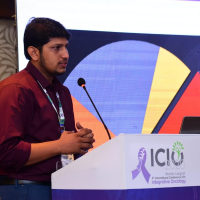
Amir Ashraf
Homoeopathy Clinic India
Abstract Title: From Obstruction to Airway Restoration: Radiological Evidence of Adenoid Regression through Homoeopathy
Biography: Dr. Amir Ashraf is a dedicated Homoeopathic physician with a strong clinical and academic background, known for his integrative approach to patient care and his commitment to evidence-based Homoeopathy. He completed his Bachelor of Homoeopathic Medicine and Surgery (BHMS) under the Rajiv Gandhi University of Health Sciences (RGUHS), Karnataka, India. He underwent a one-year compulsory rotating internship at the renowned Father Muller Homoeopathic Medical College, where he gained extensive hands-on training in both acute and chronic case management. Dr. Amir Ashraf began his professional career at Ashirvad Hospital, serving in the Department of Homoeopathy, where he efficiently managed OPD and IPD cases. This experience strengthened his expertise in hospital-based integrative care, clinical diagnostics, and individualized case management. In 2019, he founded Dr. Amir’s Family Homoeopathy Clinic, providing holistic and individualized treatment with a focus on chronic, complex, and recurrent conditions. He also serves as a Visiting Consultant at AIHMS Homoeopathy and RM Homoeopathy across Kerala, extending his clinical services and contributing to community healthcare.
Research Interest: Background: Adenoid hypertrophy is a common cause of nasal obstruction, snoring and recurrent upper respiratory issues in children. Conventional management often requires prolonged medication or surgical adenoidectomy. This case report document both clinical improvement and radiological regression of adenoid enlargement following individualized Homoeopathic treatment. Case presentation: A child aged 6 years presented with chronic mouth breathing, nasal blockage, snoring and disturbed sleep. A lateral nasopharyngeal X-ray showed grade 3 adenoid hypertrophy, with significant reduction of the nasopharyngeal airway. Based on the totality of the symptoms and clinical assessment the child was prescribed Silicea 200 weekly one dose bedtime along with Sanguinaria Nitricum 30c, Calcarea iodata 30c, and agraphis nutans 3x in therapeutic doses. Results: Over 8 weeks, the child demonstrated marked improvement- resolution of the mouth breathing, reduction in snoring, improved nasal airflow and better sleep quality. A repeat lateral X-ray showed Significant reduction in adenoid shadow, with restoration of a wide nasopharyngeal airway consistent with Grade 1 (near normal) findings. No adverse events or recurrence were observed during follow-up. Conclusion: This case highlights the potential of individualized Homoeopathic treatment to achieve measurable radiological and symptomatic improvement in adenoid hypertrophy, offering a non-surgical alternative for pediatric patients. Further controlled studies are needed to validate this findings.